





If water keeps finding its way in around a window, you already know it’s more than a small annoyance. Maybe the sill feels damp, or a stain showed up on the wall that wasn’t there last winter. Most homeowners who look up how to fix a leaky window are hoping for a quick answer and a tube of caulk, and sometimes that’s all it takes.
Most of the time, though, a window leak is telling you something bigger is going on. The damp spot you can see usually traces back to a failed seal, a frame going soft, or rain sneaking in behind the siding where you’d never think to look.
We handle this a lot in the Seattle area, because our weather is hard on windows. Months of rain and wind-driven moisture push on every weak point a window has. This guide covers what causes leaks, how to find where yours starts, why a quick DIY reseal usually disappoints, and when replacing the window is the move that actually saves you money.
What Causes a Window Leak?
A leaking window almost never has a single cause. The water you see inside is usually the last step in a longer story that began somewhere you can’t see. Before you can fix a leaky window, you have to know what’s actually driving the leak.
Here are the usual suspects when a window is leaking:
- Aging materials. Frames, seals, and weatherstripping wear out. A window that sealed tight at year two can give up by year twenty.
- Failed insulated glass seals. When the seal between the panes breaks, you get fog or haze trapped in the glass. The insulating gas has already escaped.
- Bad flashing. This is the thin metal that steers water away from the opening. Installed wrong or corroded, it lets water ride straight into the wall.
- Rotted or warped frames. Wet wood swells, shrinks, then quits. Gaps open, and rain follows them in.
- Water intrusion behind the wall. Sometimes the window is fine and the real leak sits up above it, dripping down to pool at the sill.
Our climate speeds all of this up. The same window that would last for decades in a dry climate gets pushed hard here every winter. So a window leak you can see is really a symptom. The real problem usually sits a layer deeper.
How to Fix a Leaky Window: First, Find the Source
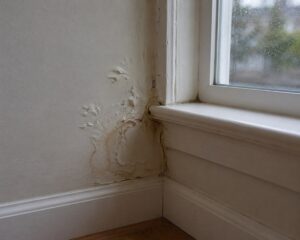
You can’t fix what you haven’t found. The smartest way to fix a leaky window starts here, by tracing where the water enters before you reach for any sealant. This is the step most quick guides skip, and it’s the one that keeps you from fixing the wrong thing.
Try it on a rainy day, or grab a garden hose and run water over the window in sections while someone watches from inside. Work from the bottom up. Note where the first drop appears. Good window water leak repair always begins with tracing the path. A lasting window water leak repair depends on getting this part right, and these checks are the real front end of how to fix window leaks.
A few spots to check:
- The glass itself. Fog or moisture between the panes means a failed seal, not something you can caulk. Water on the inside surface after a cold night is usually condensation, which is a humidity problem (don’t mistake it for a leak).
- The corners and sill. Water pooling in the bottom corners often points to worn weatherstripping or a gap where the frame meets the wall.
- Above the window. A stain that starts up top can mean the flashing or the wall above failed, and the window is simply where the water lands.
Knowing how to fix window leaks starts with this triage. Get the source right, and any window water leak repair you attempt has a real chance of holding. Get it wrong, and you’re sealing a spot the water isn’t even using.
On older homes, the leak more often traces back behind the trim than to the glass. That is the whole point of how to fix window leaks for good. You find the source first, then fix it. Worth knowing before you give up a Saturday to it.
Why DIY Fixes on a Leaking Window Rarely Hold
Caulk gets treated like a cure-all. It isn’t. A fresh bead can close a small surface gap and buy you a season or two, and plenty of guides on how to seal a leaky window stop right there.
Most people’s first instinct is to fix a leaking window with sealant, and for a truly minor gap that’s fair enough. The trouble starts when the leak lives deeper than the surface. Most failed attempts to fix a leaking window share one reason. And that’s because the sealant never reaches the actual source. Here’s where a DIY reseal tends to fail:
- A failed glass seal can’t be caulked. Once the seal between the panes goes, the glass unit needs replacing. Sealant on the outside does nothing for fog trapped inside.
- The leak starts behind the flashing. When water enters behind the trim or siding, a bead of caulk on the visible joint just hides it. The water keeps traveling inside the wall.
- Caulk is temporary by design. It shrinks and cracks within a couple of years, so a bead that looked solid last spring can be letting water past by fall. Learning how to seal a leaky window with a fresh bead might slow a minor drip, but it won’t hold back a real leak.
The bigger risk is worse than a wasted afternoon. A surface patch can trap moisture inside the wall instead of stopping it. Sealed in and out of sight, that water goes to work on your framing, your insulation, and your drywall. By the time it shows up again, the repair has grown well past the window.
So if you tried to fix a leaky window once and it came back, read that as a message. Going back to fix a leaking window with more caulk rarely reaches the real source. Knowing how to seal a leaky window helps only once you’ve found where the water actually gets in.
When You Need to Repair Leaking Windows vs. Replace Them

Not every leak means a new window. Sometimes a worn gasket or a flashing fix handles it. A one-off window leaking repair is fine when the window itself is otherwise sound. The honest question is whether you’re patching a sound window or propping up one that’s already finished.
Lean toward repair when the window is fairly new, the frame is solid, and the leak traces to one clear, reachable spot like a strip of failed weatherstripping. In that case you can often repair leaking windows and move on.
Lean toward replacement when you see these signs:
- The frame is soft or rotting. Once rot sets into the wood, sealing around it only delays the next leak.
- It leaks every time it rains. A window that fails in every storm has usually lost its weather barrier for good.
- The glass is fogged from a failed seal. You can sometimes swap the glass unit, but on an older window it’s often not worth it.
- You’ve resealed the same spot more than once. Repeated window leaking repair in one place costs more over time than a single correct replacement.
- Drafts push through even after new weatherstripping. If air gets in, water can too.
There’s a money angle here that’s easy to miss. When you repair leaking windows over and over, then pay to fix the water damage each round, the running total often passes what one proper replacement would have cost up front. Each round of window leaking repair also buys less time than the last, because the underlying window keeps aging while you patch it.
A new, well-installed window ends that cycle. It holds heat better, cuts drafts, and stops the slow damage a chronic leak does to the house around it. Through our wet months, that steadier performance shows up on both your comfort and your heating bill. When the frame is sound, though, a smart repair leaking windows plan is still the cheaper path, and a good installer will say so.
How to Seal Leaking Windows Against Future Damage
The best leak is the one that never starts. A little attention each year keeps small problems from turning into wall repairs. Knowing how to seal leaking windows for the long haul comes down to upkeep and a good install more than any single product.
A few habits that pay off:
- Watch for early signs. Check sills and corners each season for damp spots, peeling paint, or a musty smell. Catch it early and it stays cheap.
- Keep water moving away. Clean the gutters and clear the weep holes so rain drains off instead of pooling against the glass. That simple step is half of how to seal windows from water leaks.
- Handle moisture fast. A small stain today becomes a wall repair next year if you leave it alone.
- Replace tired windows before they fail. A window near the end of its life is a leak waiting to happen.
- Insist on proper installation. Flashing, sealing, and weatherproofing done right are the real way to seal windows from water leaks for decades. It beats learning how to fix a leaky window the hard way, one storm at a time.
The install is where a lot of Seattle-area leaks are born. A quality window dropped into a sloppy opening will let water in within a few years. Set correctly, that same window keeps the weather out for a very long time, which is what learning how to seal leaking windows really comes down to. Done right, the install is the last word in how to seal windows from water leaks.
Frequently Asked Questions
How do I know if my window leak is coming from the frame or the glass?
Water or fog trapped between the panes points to the glass seal. Water pooling at the sill or corners points to the frame, the weatherstripping, or the flashing. A simple hose test, worked from the bottom up, usually shows you which one you’re dealing with, and where to start if you plan to fix a leaky window yourself.
Can a leaking window really be fixed with caulk?
Sometimes, for a small surface gap. A fresh bead is a reasonable way to learn how to seal leaky windows against a minor drip for a season. It won’t fix a failed glass seal, bad flashing, or a leak behind the wall, so treat it as a patch. Most guides on how to seal leaky windows skip that part.
Why is my window leaking only when it rains?
Usually a window is leaking during rain because wind drives water against a weak point that stays dry the rest of the time. Worn flashing, a gap at the frame, or missing overhang protection are common causes. Rain-only leaks still earn a closer look before they spread.
How do I know when a leaking window should be replaced?
Think replacement when the frame is rotting, the glass is fogged, or you’ve done leaky windows repair on the same spot more than once. A window that leaks in every storm has usually lost its seal for good, and repeated leaky windows repair costs more than replacing it. If you’re weighing leaky windows repair against a new unit, the state of the frame is the deciding factor.
Can leaking windows cause mold inside my walls?
Yes. When water gets trapped in the wall, it feeds mold, rots framing, and ruins insulation, often before anything shows on the surface. Hidden damage like that is the main reason we tell homeowners not to let a leak ride.
Most Leaky Windows Need More Than a Quick Fix
If you came here for how to fix a leaky window, here’s the straight version. A small surface gap might take a bead of sealant and a free afternoon. Most leaks, though, are the visible edge of a deeper problem, and a quick patch just hides it while the water keeps working.
The signs worth acting on are simple. Fog in the glass. A soft or rotting frame. A leak that returns with every rain, or damp that keeps coming back after you fix leaky windows yourself. Searching how to seal leaky windows turns up plenty of quick tricks, and most of them only buy time. In a climate as wet as ours, catching those early protects your home from far more expensive repairs later.
If you’re not sure whether yours is a simple fix or a sign it’s time to replace, a professional set of eyes settles it fast. Signature Window & Door Replacement has helped Seattle-area homeowners with this exact question since 1999, with no pressure and no obligation in finding out where you stand. Call 253-887-7792 or request a free in-home consultation online, and we’ll tell you honestly whether a repair or a replacement makes more sense for your home.