




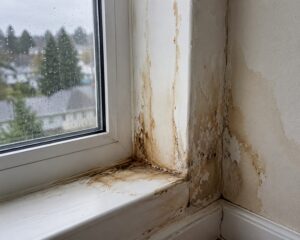
A window can leak for a year before you spot the first sign of window water damage. The water works behind the trim the whole time, soaking insulation and framing where nothing shows. By the time a stain surfaces, the wall has been wet a long while.
That is the tricky part about water damage around window openings in the greater Seattle area, where a long wet season gives a small gap time to do harm. We have inspected hundreds of leaking windows here. The homes that stay cheap to fix are the ones that caught it early. This guide reads each sign for what it says about how deep the damage runs, and whether you face a caulk repair or a replacement. To catch a leak before it gets this far, our guide to the early signs of water leaks around windows covers detection. This one picks up after that.
Why Window Leaks Turn Into Bigger Water Damage Problems
A window leak starts small. Old caulk, a failing seal, loose flashing, or a blocked weep hole lets water slip past the barrier. That first trickle rarely looks like a problem.
The damage comes from where the water goes next. Behind the trim, it follows gravity down and soaks the insulation, sill plate, and framing. Left alone, a window leaks water into that cavity a little more with every storm, all of it out of sight. That is why window leaks turn into real repair bills. Our post on why windows leak covers the causes. When a sign appears and the source is unclear, a professional inspection is the surest way to learn how far window water damage has spread.
Musty Odor
Sometimes the first sign is not something you see. It is a smell. A damp, earthy odor near a window means water has been sitting inside materials built to stay dry. A steady musty smell means moisture has soaked deep enough to break down the wood and paper inside the wall. If it lingers after you clean and air the room out, the wall is holding water.
Stains and Discoloration
A stain is the clue most people connect to water damage first. Color gets the attention, but shape and spread tell you more. A tight mark that holds its size usually means an old, dried leak. A stain with soft edges that grows after heavy rain is active, and active is what you want to find. Press gently at its edge. If the drywall gives, the board underneath likely needs replacing rather than a repaint. This check separates a surface stain from real water damage around window framing, and a fresh water damage window stain almost always fails it.
Peeling Paint or Wallpaper
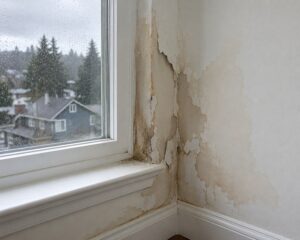
Paint and wallpaper need a dry surface to hold. When moisture reaches the drywall behind them, they bubble, blister, or lift away near the window. The reach tells you how far it has gone. A small blister at the sill is a minor, contained leak. Paint lifting a foot or two out means water has spread past the opening. These are among the clearer signs of water damage that a wall stays wet after the rain stops. Peeling that returns after a repaint means the source was never fixed.
Sagging or Soft Drywall
Drywall does not handle moisture well. Enough water and it softens, then bows or sags below the window. Soft, sagging drywall is one of the water damage signs that has already turned structural. Here is a safe test. Press a fingertip lightly against the wall just under the sill. Firm is good. A spongy give, or a cool and damp feel, means the board is saturated and probably needs to come out. Do not push hard or poke through. You are just checking for softness.
Warped Floors and Loose Flooring
Water does not stop at the wall. It heads for the lowest point it can reach, often the floor right below the window, and when window leaks carry it that far the flooring shows it. Hardwood cups at the seams, laminate swells and separates, and tile loosens as the subfloor weakens. Flooring is one of the later water damage signs to appear, and if it is involved, water has already run past the frame and through the wall.
Mold and Wood Rot
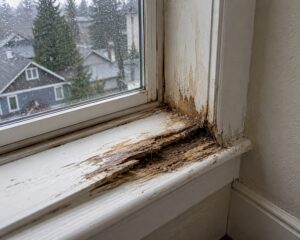
Give trapped moisture enough time and two things follow. Mold and wood rot. Both are common results of water damage around windows here, and both are worse than a stain. Mold shows as black, green, or gray patches near the frame or sill and can hurt indoor air quality. Wood rot is the structural half. Run a finger along the sill. Sound wood feels hard. Rotted wood feels soft or crumbly and may flake under light pressure. Left unchecked, water damage window frames rot from the sill up. On failing sills, we also see ants, which treat softened, damp wood as an easy way indoors. A trail near a window can hint the frame has gone soft.
Standing Water or Active Dripping
Water pooling on the sill or dripping during a storm is the least subtle sign here, and the easiest to misread. Sometimes it is nothing. A window left cracked in the rain, or condensation off cold glass on a winter morning, leaves water that wipes up and stays gone. The concern is water that returns. If a sill puddles after every rain, or a slow drip tracks down the wall inside, the weather barrier has failed out of view. When the source is not obvious, a professional inspection takes out the guesswork.
Is It a Window Leak or a Roof Leak?
Water travels well, so the true source is hard to pin down. A stain near a window does not always mean the window is to blame. Roofs, gutters, and flashing higher up can send water along a path that ends beside the frame. Stain location is your first clue. Damage from a window leak sits tight to the frame, along the sill, lower corners, or trim edges. Damage that starts above the window, or drops from the ceiling line toward it, points more often to a roof or gutter problem. On a dry day, soak the window with a hose from the bottom up while a helper watches indoors for the first drip. Water inside points to the window. A dry window sends you looking higher.
What to Do When You Spot Window Water Damage
Finding one of these signs of window water damage is not a reason to panic or to replace every window in the house. It means you have information. The next move is figuring out how deep the problem goes. Start with the easy checks. Look for a clear cause like dirt-packed weep holes or a cracked caulk line. Note whether the sign is growing or steady. Try the touch test on the drywall and sill.
The catch is that several signs of water damage look nearly identical on the surface while meaning very different things underneath. A faint stain might be an old, dried leak, or the visible tip of a soaked wall. A professional inspection is the reliable way to tell a small fix from something that has reached the framing, without assuming the answer is replacement. If you are in the greater Seattle area and unsure what a sign means, homeowners weighing repair against replacement in Woodinville, Sammamish, and nearby communities can book a free in-home consultation for a straight read on what the damage calls for.
Frequently Asked Questions
What causes window water damage in the first place?
Most window water damage traces back to a failed barrier around the opening. Worn caulk, an aged seal, loosened flashing, or clogged weep holes let rainwater past where it should stop. In our wet climate, even a small gap sees months of exposure a year, enough for a minor flaw to cause real harm.
How can I tell if a stain near my window is from a leak?
Watch whether it changes. A stain that grows after heavy rain, with soft, spreading edges, is usually active. One that holds its size and feels dry may be an old, resolved leak. When unsure, a quick professional look confirms it.
Do all signs of water damage mean I need new windows?
No. Many come down to fresh caulk, new flashing, or a seal repair on a sound window. Surface signs of water damage cannot confirm how deep the trouble runs, so an inspection is the most reliable way to know whether a repair will do.
Can water damage around windows cause mold health issues?
It can. Water damage around windows keeps building materials damp, and damp materials grow mold. Mold near a window can irritate the lungs and set off allergy or asthma symptoms. Treating the moisture source is the only lasting fix.
How do I know if it is a window leak or a roof leak?
Look at where the damage sits. Window leaks show low and tight to the frame, around the sill and lower corners. Roof or gutter leaks start higher and run down toward the window. A hose test, wetting the window bottom-up while someone watches inside, confirms or clears it.
Is it safe to paint over water stains near a window?
Painting hides a stain but does nothing about the water behind it. If the leak is still active, the stain bleeds back through, and the wall keeps breaking down under the fresh coat. Fix the source, let the area dry fully, then paint.
When should I call a professional about window leaks?
Call when a sign keeps returning, when the drywall or sill feels soft, when you find mold or rot, or when you cannot tell how serious it is. A professional can measure the true extent and give you a plain answer.
Catch Window Water Damage Early
The reassuring part is that early beats late every time. A stain or soft spot caught this season is usually a smaller, cheaper fix than the same leak found two winters from now, after it reaches the framing.
If something looks off around a window and you are not sure what it means, the fastest answer comes from having someone look directly. We will help you sort a simple caulk issue from a sign that points toward replacement. Call 253-887-7792 to set up a free consultation, and we will tell you what your windows actually need.